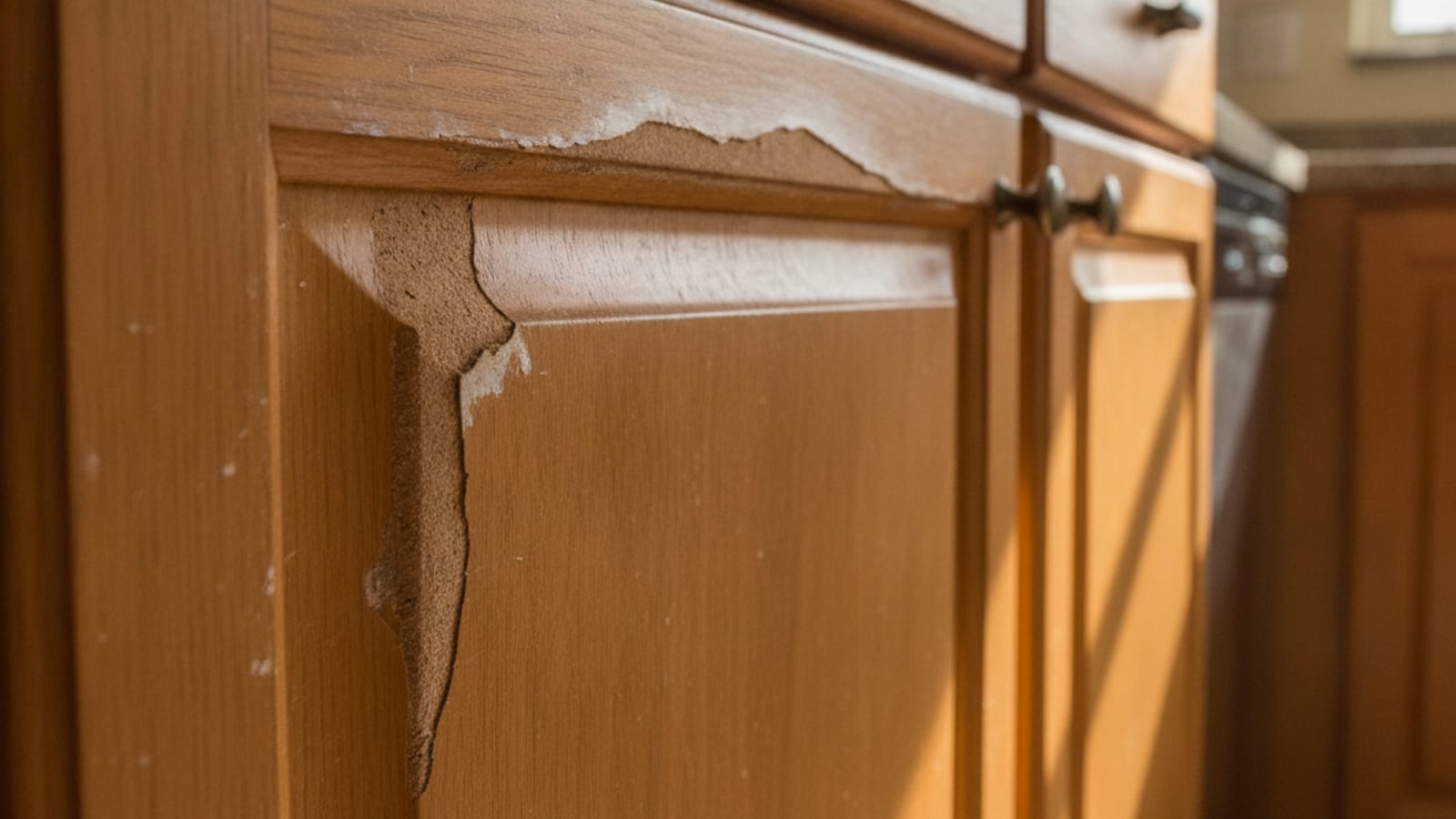
Warped cabinet doors and swollen panels are one of the most common calls we hear about across Tampa Bay, and Gulf-coast humidity is almost always part of the story. Understanding what’s actually happening inside the panel helps you decide whether a warped door needs a full replacement or can genuinely be fixed.
What’s actually happening inside a warped panel
Most cabinet doors are built from MDF (medium-density fiberboard) or particleboard, both of which are made from wood fibers pressed with resin, not solid wood. That construction makes them cheaper and more consistent to manufacture, but it also means they absorb moisture from humid air far more readily than solid wood does. As the fibers absorb moisture, they swell, and since the swelling usually isn’t perfectly even across the panel, the door bows, cups, or develops a visible ripple along one edge.
Tampa Bay’s year-round humidity, combined with the extended wet season from June through November, gives MDF and particleboard cabinets more sustained moisture exposure than most inland or drier climates, which is exactly why this shows up so often in local kitchens and bathrooms.
The two failure patterns: gradual swelling vs. direct water damage
There’s a real difference between a door that’s slowly cupped from months or years of ambient humidity exposure and a door that’s swollen fast from a direct water source, like a leaking sink supply line, a dishwasher gasket failure, or a slab leak reaching the base of a cabinet. Gradual humidity swelling tends to be milder and more even across a panel. Direct water damage is usually localized, worse, and often shows discoloration or a soft, spongy feel to the touch, not just a visual warp.
Direct water damage almost always means the source needs to be found and fixed first, whether that’s a supply line, drain, or a roof or slab leak, before any repair or replacement work makes sense. Fixing the cabinet without fixing the water source just means the same damage returns.
Repair vs. replace: how to decide
A door with mild, even warping and no visible discoloration or soft spots is sometimes salvageable, particularly if it’s caught early. A cabinet shop can sometimes flatten a mildly warped panel with controlled clamping and drying, though results vary depending on how far the swelling has progressed and how the panel was constructed.
Once a panel shows significant cupping, visible discoloration, delamination of the veneer or laminate surface, or a soft spot anywhere in the panel, replacement is almost always the better call. Cabinet repair and restoration can address damaged individual doors or drawer fronts without touching the rest of the kitchen, which keeps cost down compared to a full refacing or replacement project when the damage is limited to a few panels.
Prevention: sealing and ventilation
Properly sealed cabinet finishes, especially on the interior surfaces most people never think to check, are the first line of defense against humidity absorption. A cabinet with sealed exterior faces but an unsealed or thinly finished interior is still vulnerable, since interior air inside a closed cabinet can hold moisture just as easily as the kitchen air around it.
Ventilation matters too. Cabinets directly above a dishwasher or below a sink benefit from occasionally being left open to air out rather than staying sealed shut constantly, especially in homes without great kitchen exhaust ventilation. Running a kitchen exhaust fan during and after cooking, and fixing any known plumbing drips promptly rather than living with a slow leak, both meaningfully reduce the moisture load cabinets deal with over time.
Where this shows up most in Tampa Bay homes
Kitchens and bathrooms in older homes across Seminole Heights, Hyde Park, and similar pre-1960s neighborhoods often have original or older-generation cabinet construction that wasn’t built with today’s moisture-resistant materials, making them more prone to this kind of damage after decades of Florida humidity exposure. Newer construction generally uses more moisture-resistant panel materials as standard, though even newer cabinets aren’t immune if a direct water source goes unaddressed for long.
Solid wood vs. MDF: why the choice matters after a warping problem
Homeowners who’ve been through a warping repair sometimes ask whether switching to solid wood doors solves the problem permanently. Solid wood is meaningfully more resistant to swelling than MDF or particleboard, but it isn’t immune, since wood itself expands and contracts with humidity and temperature changes, just less dramatically and more evenly than composite materials. Solid wood is also more prone to genuine warping (a physical bending of the wood grain itself) rather than the swelling and delamination pattern typical of composite panels. For a kitchen with a documented direct water source problem that’s now fixed, solid wood doors during a repair or refacing project are a reasonable upgrade. For a kitchen with only mild ambient humidity exposure and no active water problem, quality MDF with proper sealing performs well enough that the extra cost of solid wood isn’t always necessary.
What a proper repair assessment actually looks like
A crew assessing warping damage should do more than glance at the door front. A real assessment includes checking the cabinet interior for the source of moisture (ambient vs. a specific leak), pressing on any suspected soft spots to check for structural compromise beneath the surface finish, checking whether the swelling has caused the door to bind against the frame or an adjacent cabinet, and checking hinge alignment, since a warped door often throws off hinge tension even after the panel itself is addressed. Skipping this full assessment and jumping straight to a quote for new doors sometimes means missing an active leak that will just create the same problem again within a year.
Insurance and warping damage: what’s typically covered
Sudden and accidental water damage, like a burst supply line or an appliance failure, is often covered under a standard homeowners policy, though every policy is different and coverage details should be confirmed directly with your insurer rather than assumed. Gradual damage from long-term humidity exposure or a slow, undetected leak is typically excluded from coverage, since most policies treat gradual deterioration as a maintenance issue rather than a covered loss. Documenting when damage was first noticed and getting a written assessment from a cabinet professional can matter if you’re filing a claim, particularly for distinguishing a sudden leak from months of slow ambient swelling.
When a full kitchen repaint or refacing makes more sense than spot repair
If warping damage is limited to one or two doors, spot repair or replacement of just those panels is the most cost-effective path. But if several doors across the kitchen show mild swelling or the finish is generally aging and starting to show wear alongside the warping, it’s often more efficient to address the whole kitchen at once through cabinet painting or refacing rather than repairing individual doors piecemeal over several separate visits. A crew doing an honest assessment should tell you which situation you’re in rather than defaulting to the more expensive whole-kitchen recommendation regardless of actual damage extent.
Why do my kitchen cabinet doors look warped or swollen?
Most cabinet doors are made from MDF or particleboard, which absorb moisture from humid air more readily than solid wood. Tampa Bay’s sustained humidity, especially during the June through November wet season, causes this swelling and warping over time.
Can a warped cabinet door be repaired, or does it need to be replaced?
Mild, even warping caught early is sometimes salvageable through controlled clamping and drying. Significant cupping, discoloration, delamination, or soft spots almost always mean the panel needs to be replaced.
What’s the difference between humidity swelling and water damage on cabinets?
Gradual humidity swelling tends to be mild and even across a panel. Direct water damage from a leak is usually localized, more severe, and often shows discoloration or a soft, spongy feel that ambient humidity alone doesn’t cause.
How can I prevent my cabinets from warping in Florida humidity?
Make sure interior cabinet surfaces are properly sealed, not just the visible exterior, run your kitchen exhaust fan during cooking, occasionally air out cabinets near the sink or dishwasher, and fix plumbing leaks promptly rather than letting them sit.
If you’ve got warped or swollen cabinet panels, call (813) 000-0000 and we’ll connect you with an insured local crew to assess whether repair or replacement makes sense for your kitchen.