How to Measure Your Kitchen for New Cabinets
A cabinet order built from bad numbers means backordered doors and a kitchen that sits half-finished for weeks, so getting your measurements right before you call anyone is worth the extra hour.
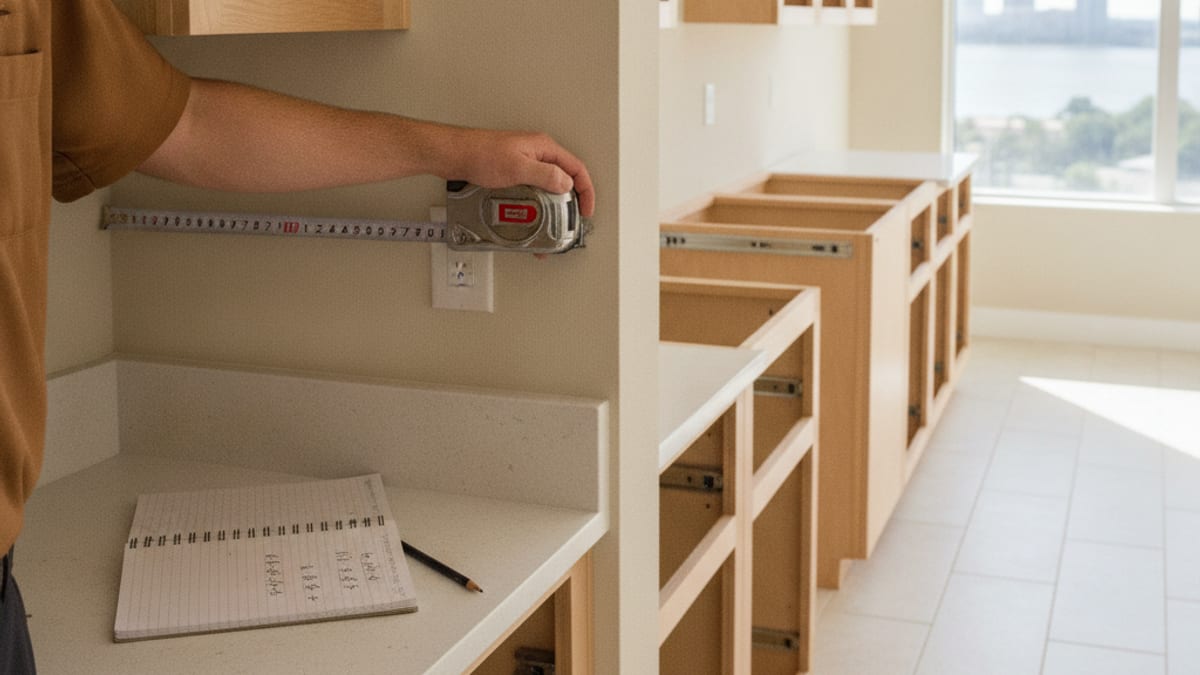
Measure Every Wall Twice, at Two Heights
Start with a steel tape measure, not a fabric one, and measure each wall run at counter height (about 36 inches up) and again along the floor. Older Tampa Bay homes, especially bungalows in Seminole Heights and Hyde Park, were framed before drywall and floor leveling were exact sciences, so the floor measurement and the counter-height measurement on the same wall can differ by half an inch or more. Write down both numbers for every wall, not just the longest run, and note which direction the wall bows if you can see daylight under a straightedge held against it.
Log Windows, Outlets, and Ceiling Height Before You Forget
Cabinet height, upper cabinet placement, and where a range hood can go all depend on window sill height, outlet locations, and ceiling height, so measure floor to ceiling in at least three spots across the kitchen. Homes in Temple Terrace and Carrollwood built in the 1970s and 80s commonly have ceilings that sag or rise half an inch across a 12-foot run from decades of settling. Mark the exact height of every outlet and switch from the floor, and measure from the corner to the near edge of every window and doorway. Cabinet installers work off these numbers to decide where a filler strip goes instead of a cut door.
What Your Numbers Can't Tell You
A tape measure will not tell you if a wall is out of plumb, if a corner is out of square, or if the subfloor dips near an exterior wall, and all three of those change what actually fits once cabinets go in. If your measurements show a wall running more than three-eighths of an inch out of level over 8 feet, or a corner that is visibly not 90 degrees, get an in-person layout check before ordering anything. That's exactly what a free in-home consult catches before you're stuck with cabinets that don't sit flush.
Rather have a pro handle it?
Free in-home consult across the Tampa Bay area. A real person picks up, not a call center.
Keep reading.
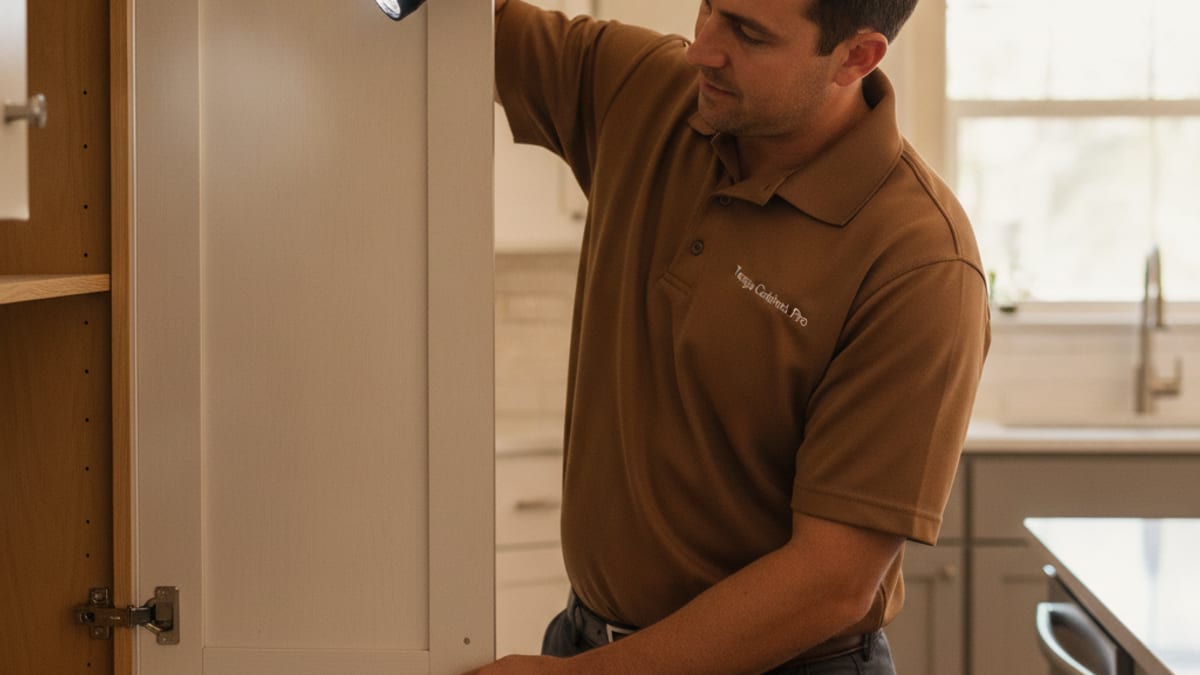
Cabinet Refacing vs. Replacement: How to Decide
Refacing keeps your cabinet boxes and swaps the parts you see, but it only works if what's underneath is actually sound, and figuring that out yourself saves a wasted consult.
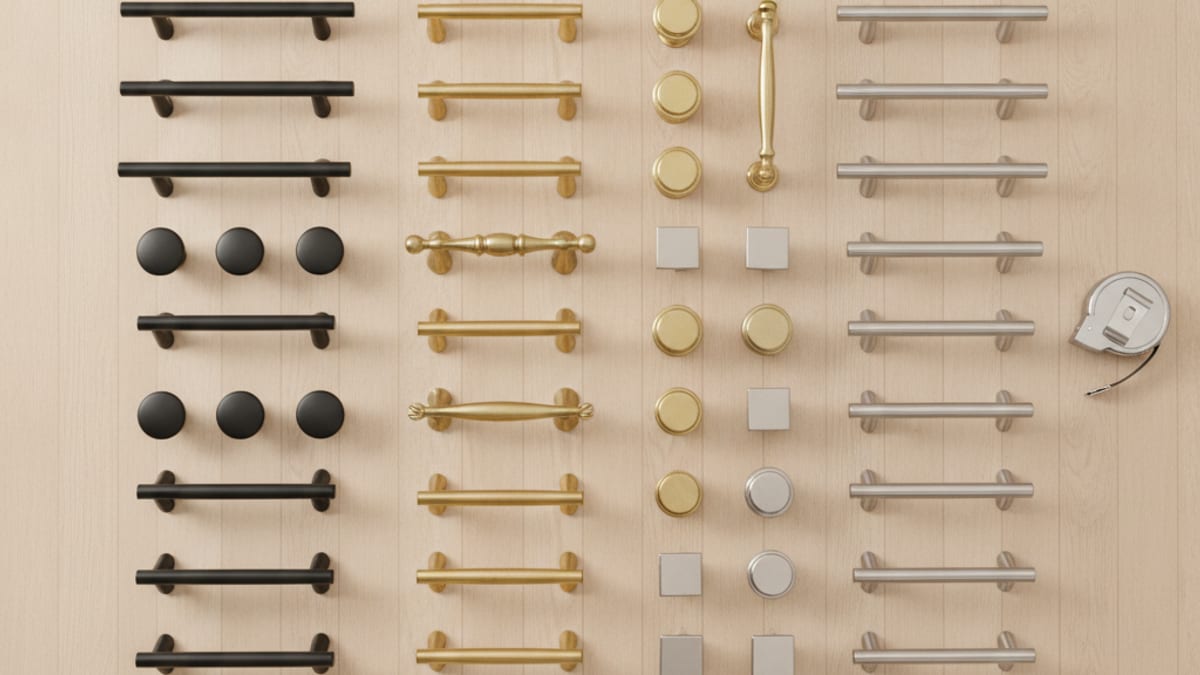
How to Choose Cabinet Hardware and Finishes
Hardware is the fastest, cheapest way to change how a kitchen looks, but getting the sizing and finish wrong means redrilling holes or hardware that corrodes early in Tampa's humidity.
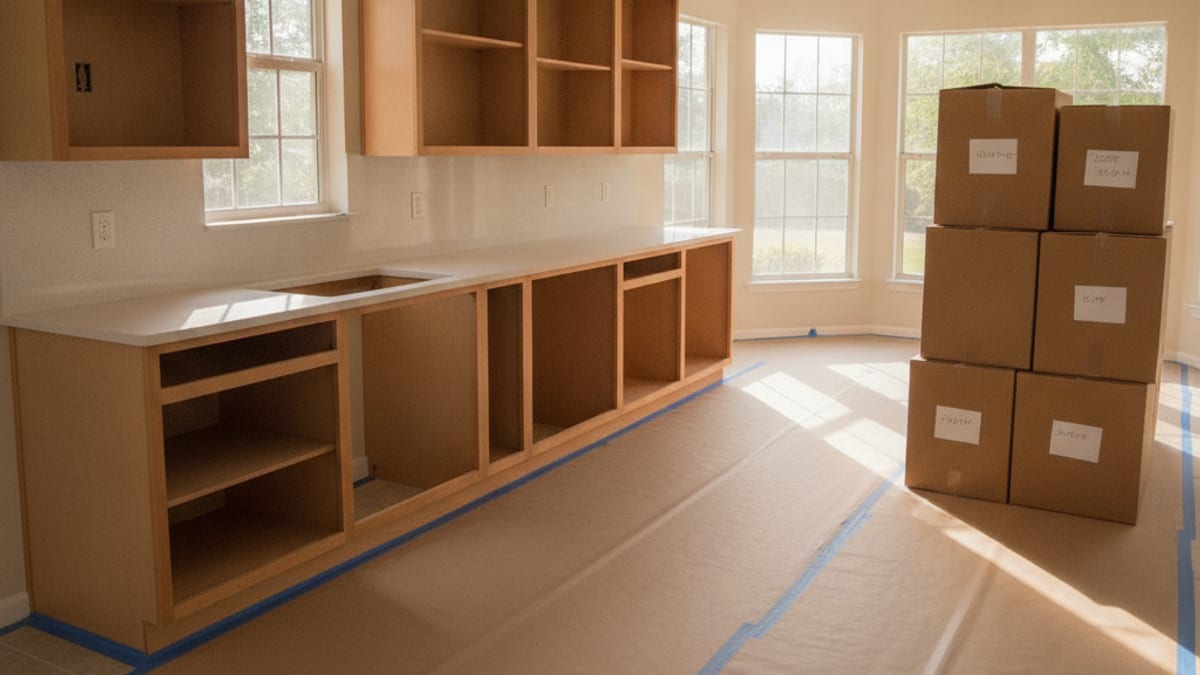
How to Prep Your Kitchen Before Cabinet Installation Day
A kitchen that's cleared, labeled, and protected before the crew arrives keeps install day moving instead of losing the morning to boxing up dishes.