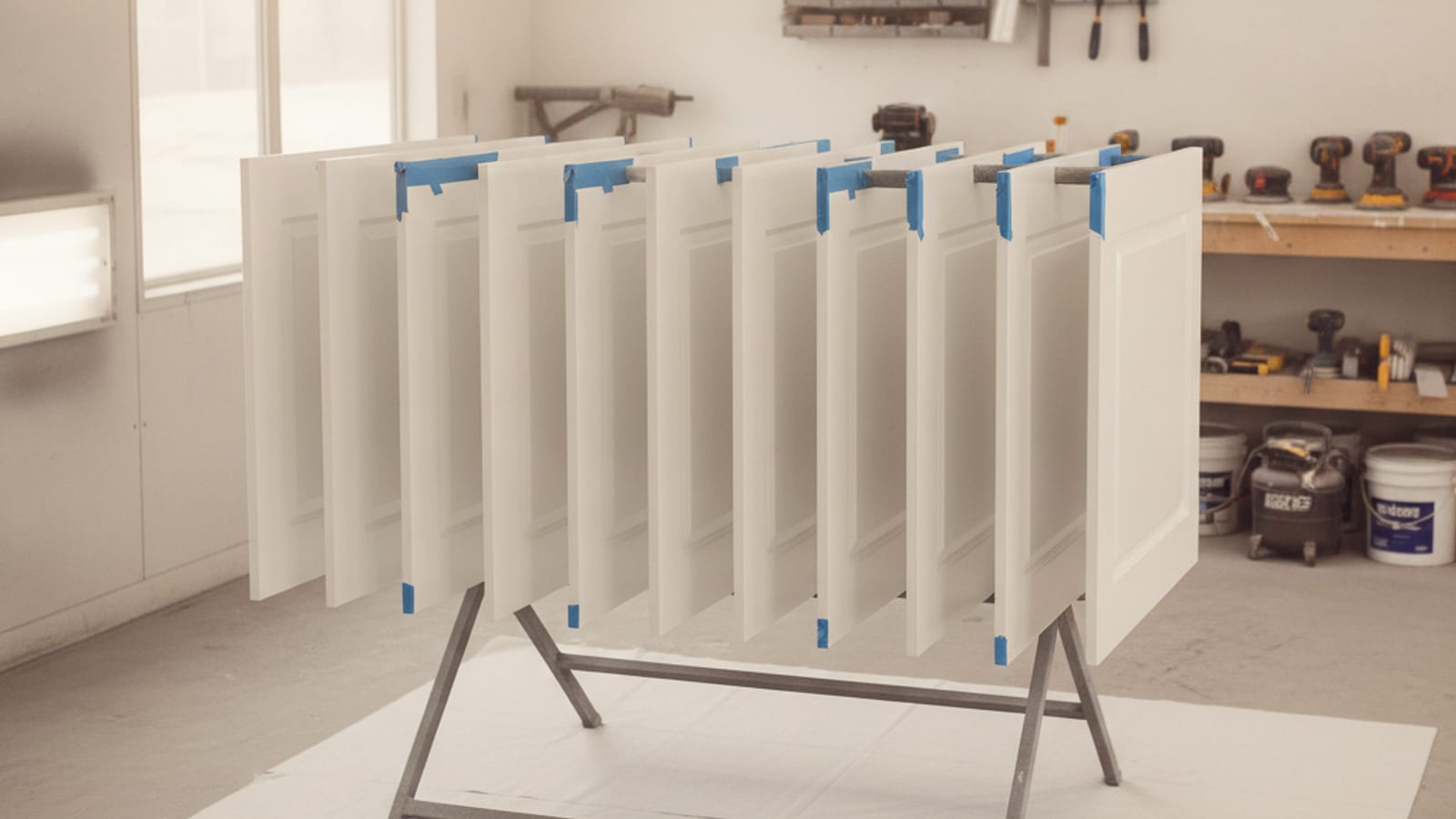
Painted cabinets are one of the most requested updates in Tampa Bay kitchens right now, and for good reason: a proper sprayed finish changes the whole feel of a kitchen for a fraction of what cabinet refacing or replacement costs. The number people ask about most is price, and it swings more than you’d expect based on color and prep work.
What a proper cabinet paint job actually involves
Cabinet painting and refinishing done right isn’t a brush-and-roller job in place. Doors and drawer fronts get removed, labeled, and sprayed off-site or in a controlled setup, while boxes and face frames get sprayed or carefully rolled in place. Every surface gets sanded or deglossed, primed, and finished with a factory-grade cabinet enamel that cures hard enough to handle daily use. Skipping the prep steps is the single biggest reason a cheap paint job looks good for six months and then starts chipping at the corners.
Base pricing by kitchen size
A small kitchen with 10 to 15 doors typically runs $2,800 to $4,500 for a full sprayed repaint, including doors, drawer fronts, and face frames. A mid-size kitchen with 20 to 25 doors lands around $4,500 to $7,500. Larger kitchens with an island commonly run $7,500 to $11,000.
Those numbers assume a same-tone or similar-tone color change with cabinets in reasonable condition. Several factors push the price above that baseline.
What pushes the price up
Dark-to-light color changes cost more because dark stains and dark paint bleed through lighter topcoats without extra sealing steps. Going from a dark cherry or espresso stain to white or a light gray usually needs a stain-blocking primer and sometimes an extra coat, which adds both material and labor time.
Glossy factory finishes need more aggressive deglossing before paint will adhere properly, since paint doesn’t bond well to a slick original finish without that step. Cabinets with a lot of ornate detail, like raised panels or heavy molding, take longer to spray evenly than flat slab doors, since overspray control and multiple coats on detailed profiles simply take more time per door.
Humidity also plays a role in scheduling more than price. Florida’s summer humidity slows cure time between coats, so a crew working through the wet season builds in extra dry time between primer, sealer, and topcoat rather than rushing the schedule and risking a soft finish that dents easily for weeks.
Color trends in Tampa Bay kitchens right now
Warm white and soft greige tones remain the most requested colors across the region, especially in older homes in Carrollwood and Town ‘n’ Country where dated oak cabinets are getting a full refresh. Sage and deep navy islands paired with white perimeter cabinets have picked up steam in newer builds around Wesley Chapel and Riverview, usually as a two-tone approach that pairs a bold island with neutral surrounding cabinets.
Cabinet material affects the result
Solid wood and MDF paint differently. MDF doors, common in mid-range stock cabinets, take paint very evenly since there’s no wood grain to telegraph through the finish. Solid wood doors show grain texture unless extra grain-filling steps are added, which some homeowners actually prefer for a slightly more traditional look. A good painter should ask which look you want rather than assuming.
Spray finish vs. brush and roll: why the method matters for the price
A sprayed finish costs more than a brush-and-roll job, but the price difference reflects a real quality gap, not just labor time. Spraying lays down an even, thin coat with no brush marks or roller texture, which is what gives painted cabinets that smooth, factory-look finish homeowners are usually picturing when they ask for a repaint. Brush-and-roll work is faster and cheaper but almost always shows some texture once the light hits a door at an angle, and it’s more prone to drips and uneven buildup around panel edges and profile details.
Most reputable cabinet painters in Tampa Bay spray doors and drawer fronts off-site or in a dedicated spray booth regardless of method used on the boxes themselves, since doors are the most visible surface and the easiest to control quality on away from the dust and airflow of an occupied kitchen.
On-site prep and what homeowners can expect during the project
A full cabinet paint job typically takes the kitchen out of normal use for four to seven days depending on size and number of coats. Doors and drawers come off first and get labeled by location so they go back exactly where they came from. Countertops, floors, and appliances get fully masked before any spraying happens on boxes and face frames in place, since overspray control matters as much indoors as it would on an exterior job.
Homeowners should expect some paint smell during the process, more noticeable with certain enamel formulations than others, and most crews recommend keeping windows open and running exhaust fans during application and initial cure time. Florida’s year-round mild temperatures make it easier to keep windows open during this process compared to colder climates, which actually works in favor of faster off-gassing and cure.
How painting compares to refacing on longevity
A quality sprayed cabinet finish, properly prepped and cured, typically holds up for eight to twelve years of daily use before it needs a refresh, depending on kitchen traffic and how well the finish was applied. Cabinet refacing generally lasts longer since new doors and veneer start with a factory finish rather than a site-applied one, but refacing costs roughly double what a paint job runs for the same kitchen. For homeowners on a tighter budget who still want the look of a fully updated kitchen, painting remains the better value even with the shorter expected lifespan.
Why most homeowners still call a professional instead of doing it themselves
DIY cabinet painting kits and tutorials are everywhere, and the material cost looks appealing compared to a professional quote. The gap shows up in equipment and technique. A proper spray finish requires an actual HVLP or airless sprayer, a controlled dust-free space to spray doors, and enough experience to lay down even coats without runs, drips, or overspray on surrounding surfaces, none of which a first-time DIY painter typically has on hand. Brush-and-roll DIY jobs skip the equipment problem but almost always show visible texture and brush marks once the paint cures, which is the exact look most homeowners are trying to move away from with a repaint in the first place.
The other real risk with DIY cabinet painting is prep work. Skipping proper degreasing, sanding, or priming is invisible on day one and shows up three to six months later as peeling paint around handles and high-touch areas, at which point fixing it costs more than if a professional had been hired from the start. For homeowners comfortable with the process and equipment, DIY can work for a smaller secondary project like a bathroom vanity or a laundry room cabinet. For a full kitchen that needs to hold up to years of daily use, professional application remains the more reliable route.
How much does it cost to paint kitchen cabinets in Tampa?
A mid-size kitchen with 20 to 25 doors typically runs $4,500 to $7,500 for a full sprayed repaint including doors, drawer fronts, and face frames. Larger kitchens with an island run higher.
Why does changing from dark to light cabinet color cost more?
Dark stains and paint bleed through lighter topcoats without a stain-blocking primer and sometimes an extra coat, which adds material and labor time beyond a same-tone repaint.
Does Florida humidity affect cabinet painting?
It affects cure time between coats more than final quality. A crew working through Tampa’s humid summer months should build in extra dry time between primer, sealer, and topcoat rather than rushing the schedule.
Is MDF or solid wood better for a painted cabinet finish?
MDF takes paint very evenly with no visible grain. Solid wood shows grain texture unless grain-filling steps are added, which some homeowners prefer for a more traditional look.
Getting two or three written quotes before committing helps confirm that everyone is pricing the same scope of prep, coats, and finish rather than comparing a full professional job against a corner-cutting one on price alone.
Ready for a real quote on your kitchen’s color change? Call (813) 000-0000 and we’ll connect you with an insured local crew for a free consult, serving Carrollwood, Town ‘n’ Country, and the rest of Tampa Bay.