Custom cabinets take longer than stock or refacing projects, and most of that time isn’t spent on installation day. It’s spent in design, ordering, and building, which is the part homeowners underestimate most when they’re planning a kitchen around a move-in date or a holiday deadline.
The full timeline, start to finish
For built-to-fit shaker or inset cabinets, plan on 8 to 14 weeks from signed design to final install. That breaks down roughly into two weeks for measuring and finalizing the design, one to two weeks for material and hardware ordering, four to eight weeks for the actual build depending on the shop’s backlog, and one to two weeks for delivery and installation.
Design and measuring happen first, and rushing this step is the most common reason a build gets delayed later. A designer needs exact dimensions of every wall, corner, window, and appliance opening, plus decisions on door style, wood species, finish, and hardware, before anything gets ordered.
Why build time varies so much
Shop backlog is the biggest variable. A local cabinet shop running close to capacity might quote 10 to 12 weeks for the build phase alone, while a shop with more availability could turn the same order around in 5 to 6 weeks. This is worth asking about directly during the quote process, since a shop won’t always volunteer how backed up they are.
Door style also matters. Simple flat-panel shaker doors build faster than inset doors, which require tighter tolerances and more hand-fitting to sit flush with the face frame. Full-overlay inset cabinetry, increasingly popular for a custom high-end look, adds real time to the build phase compared to standard overlay construction.
Special-order hardware: the most common delay
Soft-close hinges and slides are usually stocked and fast. But specialty cabinet hardware like unlacquered brass pulls or matched hardware sets ordered from smaller manufacturers can add two to four weeks on their own if they’re backordered, which happens more often than most homeowners expect. If you’ve got your heart set on a specific hardware line, order it early and separately from the cabinet build itself so it doesn’t hold up the whole project.
What older Tampa Bay homes add to the timeline
Homes in Seminole Heights, Hyde Park, and other pre-1960s neighborhoods often reveal structural surprises once demo starts: out-of-square walls, uneven floors from decades of settling, or plumbing and electrical that needs to move before new boxes go in. A custom shop that’s used to working in older Tampa homes builds in scribe allowances and site-verification steps specifically because of this, but even careful planning can’t catch everything until the old cabinets are actually out.
Newer construction in areas like Wesley Chapel and Riverview generally moves faster through installation since walls are square and there are fewer hidden surprises behind the old cabinets, though the design and build phases take the same amount of time regardless of home age.
How to keep your project on schedule
Lock in your design and finish selections early and avoid changing your mind mid-build, since design changes after ordering can restart parts of the process. Order specialty hardware the same week you sign off on the design rather than waiting. And ask your shop directly for their current build-phase timeline rather than assuming the number from a past project or a friend’s kitchen still applies.
What happens during the design and measuring phase
A real design appointment goes well beyond a tape measure and a catalog. A designer walks the space, checks that walls are actually square (a lot of older Tampa Bay homes aren’t, even by a small margin that still matters for cabinet fit), confirms window and appliance rough openings, and works through door style, wood species, finish color, and hardware as a full package rather than piece by piece. Homeowners who come in with a clear idea of the look they want, whether from photos or a specific style name, move through this phase faster than those deciding from scratch during the appointment itself.
Final measurements typically get locked in a second time closer to the order date, since even a few weeks between the first walkthrough and final sign-off can matter if any other work, like flooring or wall changes, is happening in the same space.
Wood species and finish availability
Popular species like maple and paint-grade poplar are usually in steady supply and don’t add meaningfully to the timeline. Less common species, or a specific stain color that requires custom color-matching against a sample, can add time to the front end of the build phase while the shop confirms the finish will come out consistent across every door and drawer front in the order. Asking to see a finished sample in the actual species and stain combination you want, not just a color chip, is worth the extra step before finalizing.
What a mid-build check-in should cover
Most custom shops offer or should offer a mid-build update, even if it’s just a photo or a quick call confirming the build is on schedule. This is the point to flag if you’ve had a change of heart on a detail, though changes at this stage usually mean added time and cost rather than a simple swap, since parts of the order may already be cut or finished. A shop that communicates proactively during the build phase, rather than going quiet until delivery, is worth prioritizing when you’re comparing quotes, since silence during an 8-to-14-week project is its own kind of red flag.
Delivery, installation, and the final walkthrough
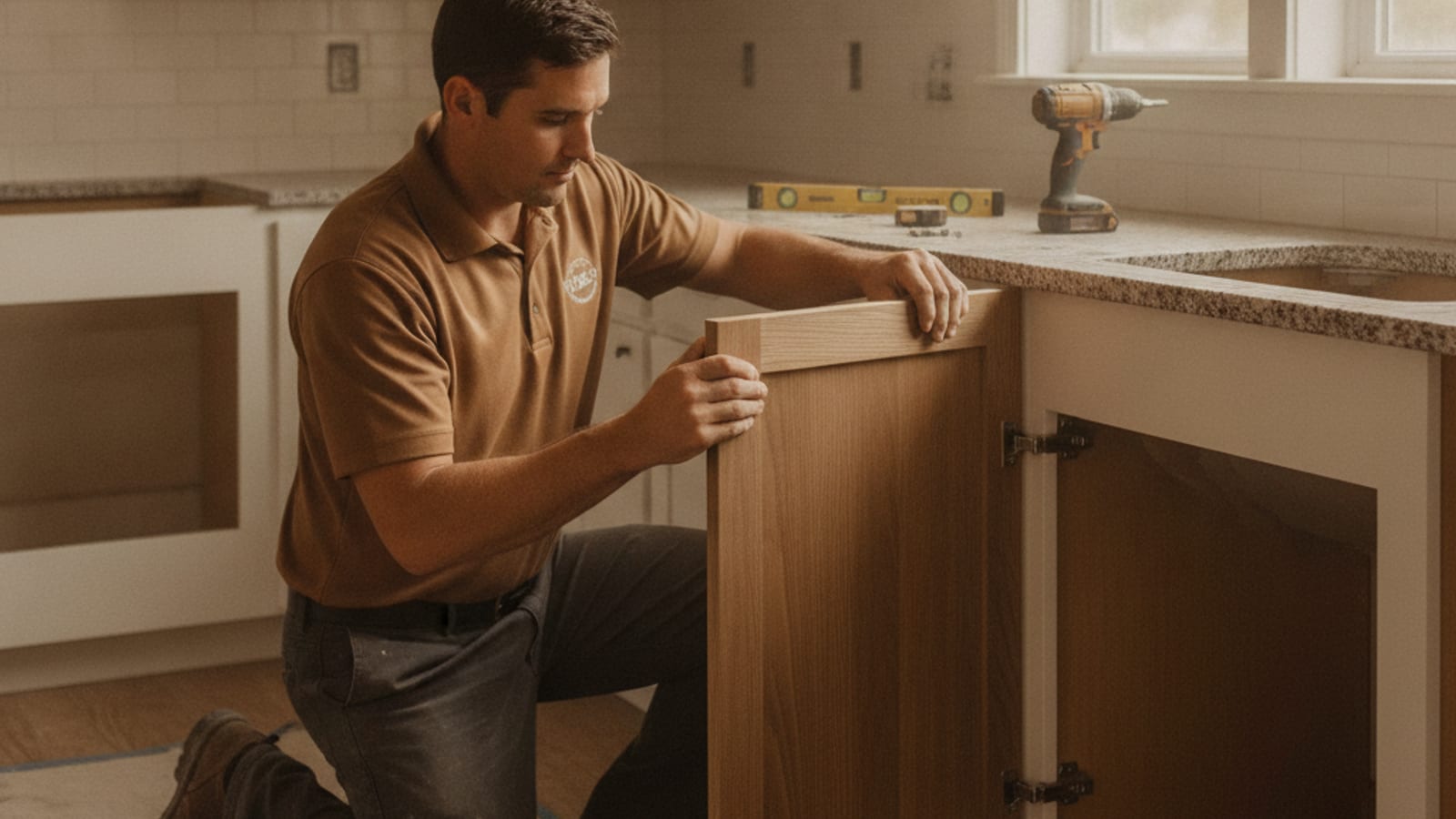
Once cabinets arrive, installation for a full kitchen typically takes one to two weeks depending on kitchen size and whether any last-minute scribing or fitting is needed around walls, floors, or trim. A final walkthrough should happen with the installer present, checking that every door and drawer opens and closes properly, hardware is aligned, and any touch-up painting or finish work is completed before the crew considers the job done.
Setting up a livable kitchen during the build
Since a custom cabinet project takes weeks longer than refacing or painting, planning a temporary kitchen setup matters more than homeowners often expect going in. A basic setup, a folding table, a microwave, a mini fridge, and access to a bathroom or laundry room sink for dishes, keeps a household functional through demo and installation without eating out for every meal for two months straight. Setting this up in a garage, dining room, or another out-of-the-way space before demo starts, rather than scrambling once the old kitchen is already gone, makes the build phase noticeably less disruptive.
Why rushing the front end almost always backfires
The biggest risk to a custom cabinet timeline isn’t the build phase itself, it’s rushing the design and measuring phase to get the order placed faster. A design finalized without full attention to appliance clearances, door swing conflicts, or finish selection often means a change order once the cabinets arrive and don’t quite fit or look right, which resets part of the build clock and adds real cost on top of the delay. Taking the full two weeks typically allotted for design and measuring, rather than compressing it to save a few days upfront, is consistently the better trade across real Tampa Bay projects.
How long does it take to build custom kitchen cabinets in Tampa?
Plan on 8 to 14 weeks total from signed design to final install, with the build phase itself typically running 4 to 8 weeks depending on the shop’s current backlog.
What’s the most common reason a custom cabinet project gets delayed?
Special-order hardware, especially specialty pulls or matched hardware sets from smaller manufacturers, is the most frequent delay and can add two to four weeks if backordered.
Do older Tampa Bay homes take longer for custom cabinet installation?
Often, yes. Homes built before 1970 in areas like Seminole Heights and Hyde Park can reveal out-of-square walls or plumbing that needs to move once old cabinets come out, which adds time even with careful pre-demo planning.
Does door style affect build time?
Yes. Simple flat-panel shaker doors build faster than inset doors, which require tighter, more hand-fitted tolerances to sit flush with the face frame.
If you’re planning a custom kitchen and want a realistic timeline for your specific home, call (813) 000-0000 and we’ll connect you with an insured local crew for a design consult, anywhere from Wesley Chapel to South Tampa.