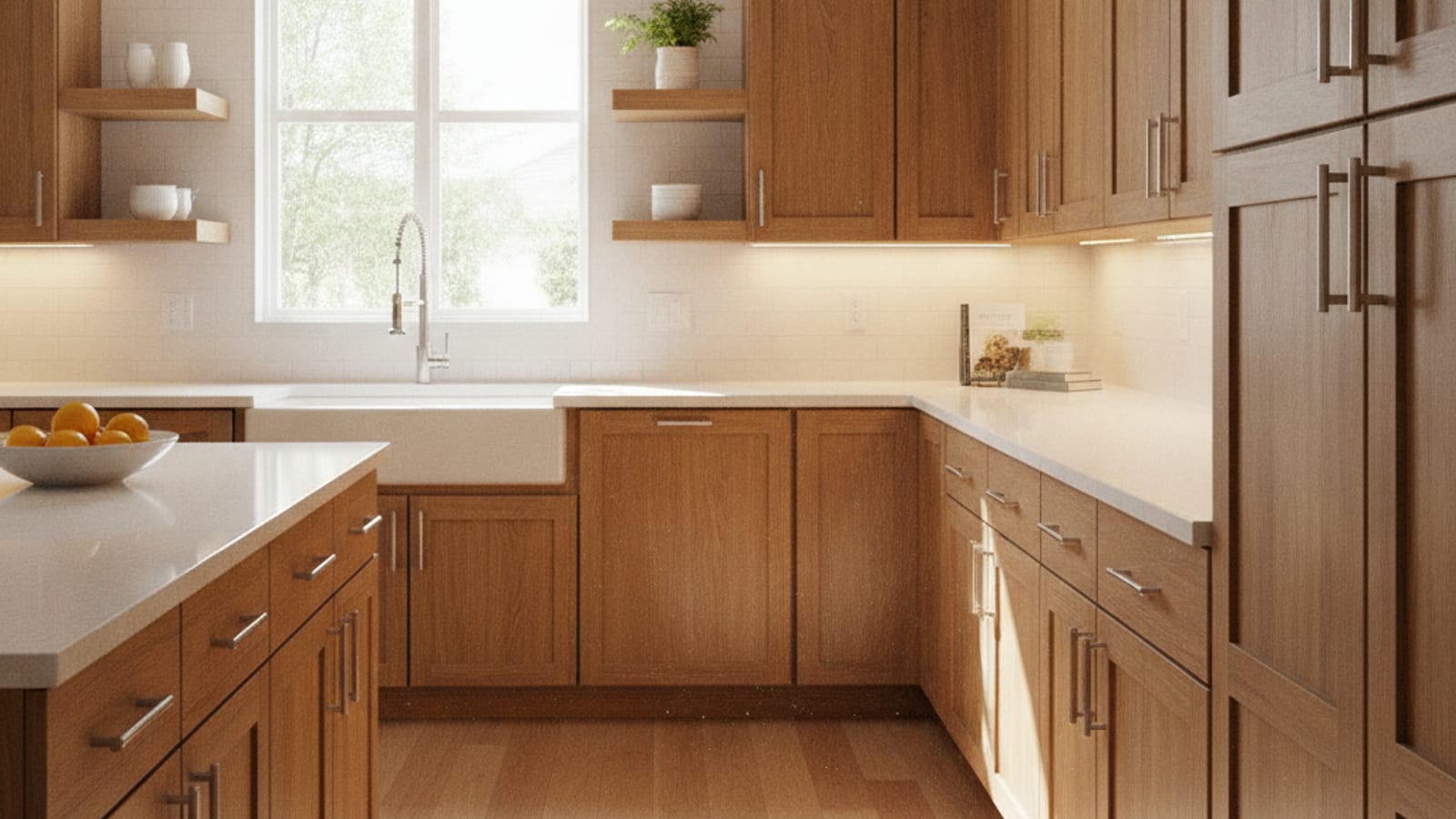
Cabinet refacing keeps showing up as the middle option between painting and a full teardown, and Tampa Bay homeowners usually want a straight answer on what it actually costs before they call anyone. The number depends heavily on the shape your existing boxes are in and how many doors and drawers you’re covering, so here’s what real projects run across the region.
What refacing actually includes
Refacing means new doors, new drawer fronts, and new veneer applied to the face frames and exposed sides of your existing cabinet boxes. The boxes themselves stay put, which is the whole reason refacing costs less than replacement: no demo, no new plumbing or electrical rough-in around the cabinets, and usually no permit trigger. Cabinet refacing works best when the boxes are structurally sound and the layout you have is the layout you want to keep.
Base pricing by kitchen size
A small kitchen with 10 to 15 cabinet doors typically runs $4,500 to $7,000 for a full refacing job, including new doors, drawer fronts, veneer, and hardware. A mid-size kitchen with 20 to 25 doors lands in the $7,500 to $12,000 range. Larger kitchens with an island and 30-plus doors can run $12,000 to $18,000 depending on door style and material.
Those ranges assume standard box condition. Boxes with water damage, warping, or loose face frames add cost before the veneer or new doors ever go on, since that structural work has to happen first.
What drives the price up
Door material is the biggest lever. Solid wood doors cost meaningfully more than laminate or thermofoil options, and a shaker or raised-panel profile costs more to produce than a flat slab door. Full-overlay doors, which cover more of the face frame and give a more custom look, run higher than standard overlay because they require tighter tolerances during install.
Drawer count matters too. Refacing a drawer front is roughly the same cost as refacing a door, so a kitchen with a lot of narrow drawer banks costs more per linear foot than one with fewer, wider drawers. New hardware, soft-close hinge upgrades, and interior organizer additions all sit on top of the base refacing number as separate line items.
Seminole Heights and Hyde Park: where refacing works and where it doesn’t
Seminole Heights and Hyde Park both have a lot of cabinet boxes from the 1920s through 1960s, and the results vary a lot house to house. Solid wood face frames from that era, even ones that look dated, often reface beautifully once the veneer and new doors go on, because the underlying box was built well and hasn’t shifted.
The problem shows up in homes with a history of slab leaks or past water intrusion near the sink base or dishwasher cabinet. If the particleboard or MDF sides swelled at any point, refacing over that damage just hides a problem that will telegraph through the new veneer within a year or two. A good crew checks box condition at the base of every cabinet before quoting, not after signing.
When replacement beats refacing on price
If more than a handful of boxes need structural repair, or if you’re changing the layout at all (moving a sink, widening an opening, adding an island), new cabinet installation often ends up cheaper than refacing plus repair once you add up the extra labor. Refacing only saves money when the boxes underneath are genuinely sound.
How estimators actually price a refacing job
Most Tampa Bay cabinet crews price refacing by linear footage of cabinetry combined with a per-door and per-drawer-front count, rather than a flat per-kitchen number. A kitchen with a lot of upper and lower runs but a modest number of wide doors prices differently than a kitchen with the same square footage but many narrow drawer banks and a spice-cabinet style layout with extra small doors. This is why two kitchens that look similar in size on paper can land $2,000 or more apart once an estimator actually counts doors and measures linear feet.
Corner cabinets and any cabinet with an angled or non-standard face also add labor time, since the veneer and new door have to be scribed and fitted rather than installed off a standard template. A crew quoting from a photo or phone call alone can only give a rough range. An accurate number requires someone measuring the actual kitchen.
What’s typically included vs. billed separately
A base refacing quote usually covers new doors, new drawer fronts, matching veneer for exposed face frames and cabinet ends, and standard hinges. Several common upgrades sit outside that base number as add-ons: soft-close hinge and slide conversion on every door and drawer, crown molding added along the top of upper cabinets, toe-kick replacement if the existing one is damaged or doesn’t match the new doors, and interior organizer additions like pull-out trays or lazy Susans.
Asking a crew to itemize which of these are included versus optional before signing avoids the most common source of refacing sticker shock, which is a homeowner assuming soft-close hardware or crown molding was baked into the number when it was actually quoted as an add-on.
Financing the gap between refacing and replacement
Because refacing sits meaningfully below replacement cost, a lot of homeowners use it specifically to stay within a fixed budget rather than stretching for a full new-cabinet project. If your budget is closer to the replacement range but your boxes are sound, it’s often worth asking about upgrading door material or adding soft-close hardware and better organizers within a refacing project rather than jumping to full replacement, since that combination frequently lands close to a mid-tier replacement look for less money.
Getting an accurate quote instead of a phone estimate
The single best way to avoid a surprise number is an in-home consult where someone physically opens every cabinet, checks the base for water damage, counts doors and drawers, and measures linear footage before writing a number down. A phone or online estimate based on square footage of the kitchen alone is a starting range at best, not a real quote, since it can’t account for box condition, corner cabinets, or the specific door style you want.
What a written estimate should actually include
A trustworthy refacing estimate itemizes door and drawer front count, veneer for exposed cabinet ends and face frames, hardware, and labor as separate line items rather than one lump-sum number. It should also specify door material and profile by name, not just “new doors,” since a vague estimate makes it easy for a lower bidder to win the job on price and then substitute a cheaper material once work starts. Ask whether the estimate includes disposal of old doors and drawer fronts and cleanup at project completion, since those costs sometimes get tacked on separately if they’re not spelled out upfront.
Comparing two or three written estimates side by side, rather than going with the first number you hear, is worth the extra week it takes, particularly since refacing quotes across Tampa Bay crews can vary by a few thousand dollars for what looks like the same scope of work on paper. The gap often comes down to material quality and what’s included versus billed as an add-on, which is exactly why an itemized estimate matters more than the bottom-line number alone.
How much does cabinet refacing cost for an average Tampa Bay kitchen?
Most mid-size kitchens run $7,500 to $12,000 for a complete refacing job, including new doors, drawer fronts, veneer, and hardware. Larger kitchens with an island run higher.
Does refacing work on older homes in Seminole Heights or Hyde Park?
Often, yes. Pre-1960s solid wood face frames typically reface well if the boxes haven’t had water damage. A crew should check box condition at every cabinet base before quoting.
What makes refacing cost more than the base estimate?
Solid wood doors, raised-panel or full-overlay profiles, high drawer counts, and structural repairs to water-damaged boxes are the most common reasons a refacing quote comes in above the base range.
Is refacing cheaper than full cabinet replacement?
Usually, as long as the existing boxes are structurally sound and you’re keeping the current layout. Once boxes need repair or the layout is changing, replacement often becomes the better value.
If you want a real number for your kitchen, call (813) 000-0000 and we’ll connect you with an insured local crew for a free in-home consult, whether you’re in Seminole Heights, Hyde Park, or anywhere else across Tampa Bay.